
 Australia
 UK
UK USA
USA
- Case StudyHelp.com
- Sample Questions
Case Study: Symptomatic Bradycardia and Suspected Cardiogenic Shock
Are you looking for the best assignment Help online? Get Case Study Solutions on Symptomatic Bradycardia and Suspected Cardiogenic Shock by Nursing experts. We solve all your queries related this topic. Hire top PhD/Masters writers and avail of our Nursing assignment writing help online at a reasonable price. Contact our 24/7 live chat team for case study writing services anytime at Casestudyhelp.com. Explore Now!

Case Study Scenario
You are commencing your morning shift in your local emergency department as the emergency nursing student. You receive handover from the ambulance on your new patient, Ron. Ron is a 73-year-old male called the ambulance today after experiencing episodes of light-headedness and syncope over the last two days.
Background:
Ron reports having episodes of feeling lightheaded intermittently over the last 2-3 days and reports that approx. 6 hours earlier had an unwitnessed episode of possible syncope where he awoke on the floor of the lounge unsure of what had happened. He had another episode more recently, witnessed by his partner Gerald. Gerald reports that Ron was standing in the kitchen and had complained of feeling ‘strange’ and collapsed on the floor, fortunately not striking his head or injuring himself. His past medical history includes Inferolateral STEMI 2 years ago, requiring percutaneous coronary intervention, and hypertension. Regular medications include atenolol, perindopril, aspirin and atorvastatin. He has a penicillin allergy.
Your initial findings on assessment:
Eyes open spontaneously, orientated to place and person, able to follow commands.
- Temperature: 35.4 and cool on palpation
- Pulse: 36 bpm and regular
- Blood Pressure: 90/46mmHg
- Respiration: 18 bpm – clear respirations bilaterally
- SpO2: 98% on room air
- Pain: 0/10
Rhythm strip:
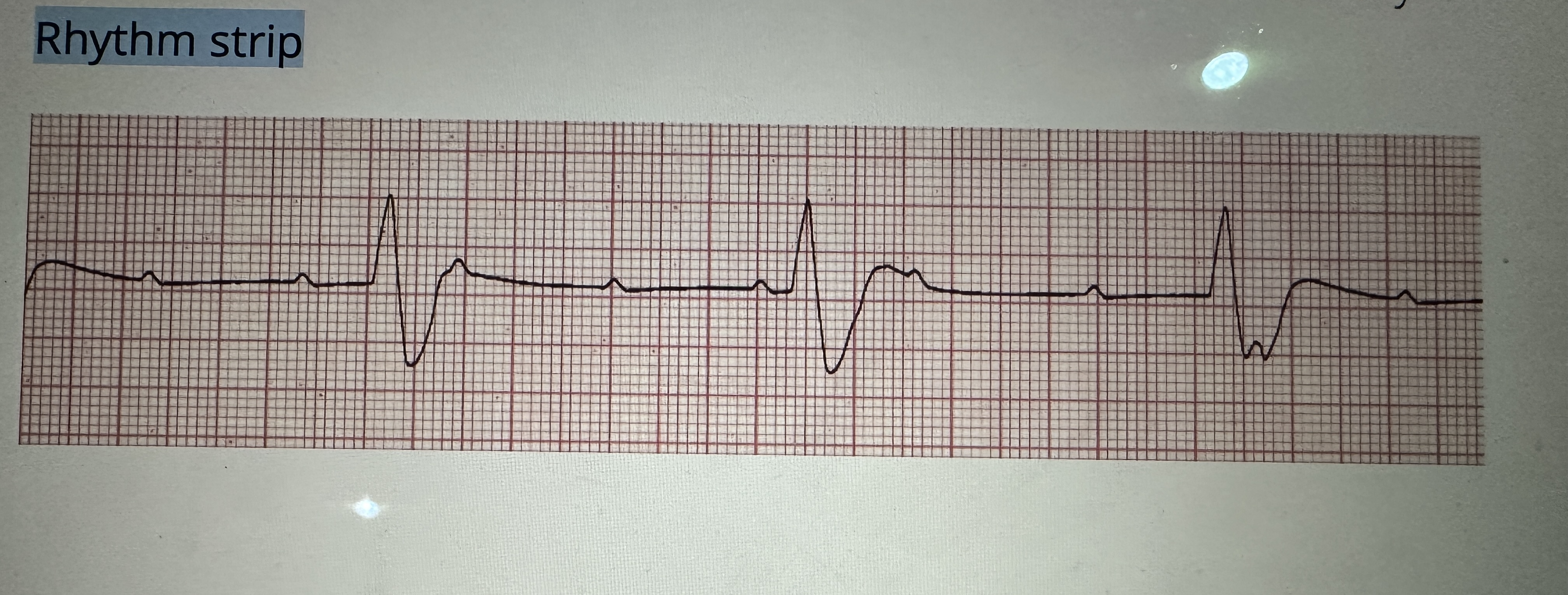
Answer following six questions
Question 1
The paramedic is concerned about Ron’s cardiac rhythm. Review the rhythm strip in the case study document and explain the key features of the rhythm with reference to the presenting history and assessments of Ron so far.
Your response to this question should be approximately 300 words.
Question 2
Ron may be experiencing signs and symptoms of cardiogenic shock. Explain the pathophysiology of cardiogenic shock with reference to the presenting history, cardiac rhythm, and assessments of Ron so far. You should include discussion of cardiac output, fluid distribution and compensatory mechanisms.
Your response to this question should be approximately 400 words.
Question 3
Identify three (3) priority nursing assessments that you should perform to help you create a clinical picture of Ron. You may include maximum of one (1) nurse-initiated diagnostic. In your response ensure you explain:
- the physiological rationale for performing the assessment
- the expected findings that would indicate a return to homeostasis
- the expected findings that would indicate further deterioration.
Your response to this question should be approximately 450 words.
Question 4
Yourself and the medical officer think about the cause of Ron’s bradycardic events. Discuss the possible causes of Ron’s bradycardia. In your response you should include links to the history and assessments of Ron so far.
Your response to this question should be approximately 300 words.
Question 5
Serum Troponin levels have been sent along with electrolytes as part of the initial workup of Ron’s pathology. Explain the relevance of elevated serum Troponin levels within the context of Ron’s presentation and clinical findings so far.
Your response to this question should be approximately 150 words.
Question 6
The senior doctor requests that an Isoprenaline infusion is commenced as per hospital policy whilst they refer to tertiary cardiologists for transfer. Provide an explanation of the indication and precautions of Isoprenaline with reference to Ron’s history and ECG findings.
Your reponse to this question should be approximately 200 words.
